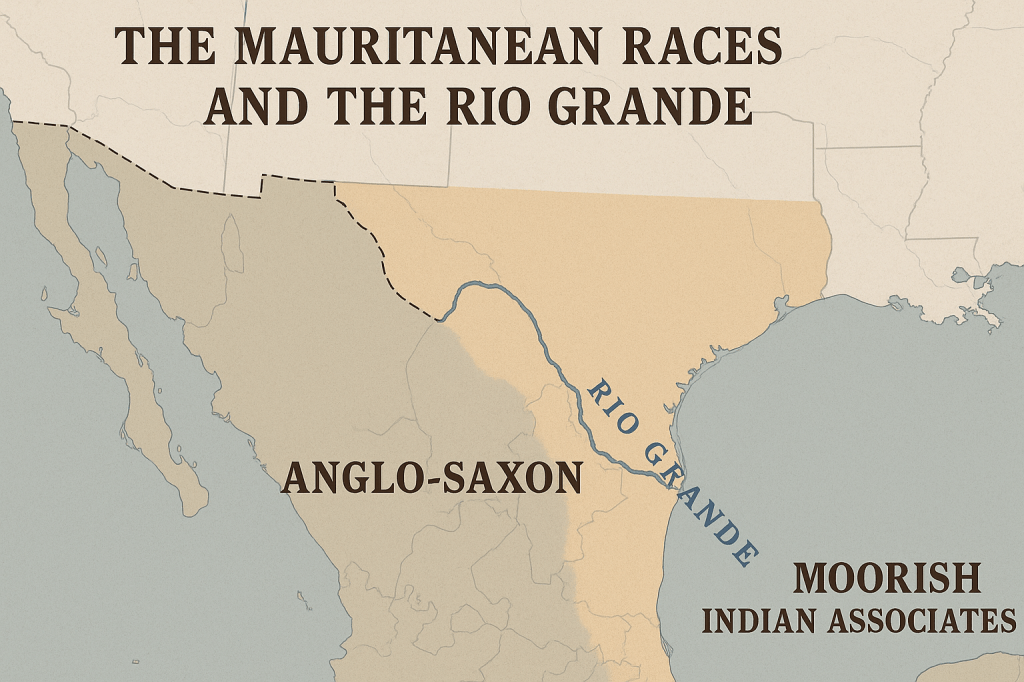
Welcome back to The Sovereign Mind, where we’re exploring the path to earned sovereignty through self-governance, guided by the principles of The Moorish Alliance of Friendship and Peace. In our recent posts, we’ve examined emotional mastery, critical thinking, community-building, and equitable systems as pillars of sovereignty. Last week, we saw how historical truths guide us toward just governance. Today, we deepen that exploration by confronting a specific historical distortion: the racialized narratives of 19th-century American imperialism, as revealed in Alexander H. Stephens’ 1846 speech on the Mexican-American War. Join us as we uncover how reclaiming historical truth empowers us to govern ourselves as true Safirs, restoring dignity and harmony to the Creator’s creation.
History as a Battleground for Sovereignty
In 1846, U.S. Representative Alexander H. Stephens framed the Mexican-American War not just as a territorial dispute but as a clash of civilizations, calling the Rio Grande a “natural boundary” between the Anglo-Saxon U.S. and a “Mauritanean” (Moorish-Indigenous) Mexico. His words, rooted in racial typologies, dismissed Mexico’s rich heritage—blending Indigenous, Moorish, and Spanish influences—as inferior, justifying conquest and erasure. This distortion, as The Moorish Alliance’s Covenant warns, is a form of historical fraud that undermines sovereignty by denying the humanity and agency of entire peoples.
The Covenant calls us to “educate and advocate for the correction of historical fraud,” aligning with our mission to reclaim truth as a foundation for sovereignty. Stephens’ speech reveals how narratives of racial superiority were used to limit who could claim sovereignty, a tactic that echoes modern divisions. By confronting these distortions, we practice Ikhlās (sincerity), seeking truth without ego, and Tawbah (repentance), realigning with the Creator’s principles of justice and love (Mahabbah).
The Moorish Legacy and Erasure
Stephens’ use of “Mauritanean” to describe Mexicans points to a deeper truth: the Moorish influence in the Americas, inherited through Spain’s 800-year Muslim history (711–1492), was a vital part of the region’s cultural fabric. Yet, this legacy was marginalized, as were Indigenous contributions, to uphold a myth of Anglo-Saxon supremacy. The Moorish Alliance, rooted in the 1786 Moorish Treaty of Peace and Friendship, reminds us that Moors were recognized as sovereign partners in diplomacy, not inferior others. By erasing this history, imperial narratives stripped peoples of their rightful sovereignty, a wrong we must correct through education.
Science supports this call. Historiography, the study of how history is written, shows that dominant narratives often serve power, not truth. A 2021 study in The American Historical Review found that inclusive histories, acknowledging marginalized voices, foster greater social cohesion. By reclaiming the Moorish and Indigenous contributions to the Americas, we honor the Creator’s diverse creation and strengthen our collective sovereignty.
Reclaiming Truth as a Sovereign Act
To earn sovereignty, we must govern our understanding of history with clarity and accountability. This means questioning narratives that divide, such as Stephens’ racialized boundaries, and seeking the truth behind them. The Covenant’s commitment to defining terms clearly guides us here: terms like “Mauritanean” were weaponized to dehumanize, but by redefining them through historical context, we restore dignity. This act of education is a demonstration of sovereignty, aligning with Dhikr—remembrance of the divine—by honoring the interconnectedness of all peoples.
Imagine a classroom discussion about the Mexican-American War. A Safir doesn’t repeat sanitized narratives but shares the Moorish and Indigenous roots of the Americas, sparking dialogue that heals division. This act of truth-telling builds a polis rooted in justice, reflecting the Alliance’s vision of peace.
Practical Steps to Reclaim History
Here are three ways to govern your understanding of history and strengthen your sovereignty:
- Investigate Marginalized Histories: Research the Moorish influence in the Americas or Indigenous governance systems, such as the Aztec Triple Alliance. Use primary sources like treaties or oral histories to uncover hidden truths.
- Challenge Dominant Narratives: When reading about history, ask: Who is telling this story? Whose voices are missing? Share your findings with others to foster clarity, as the Covenant urges.
- Educate Your Community: Host a discussion or write a post about a forgotten history, like the Moorish Treaty. This act of education aligns with Mahabbah, uplifting others through knowledge.
Demonstrating Sovereignty Through Truth
A Safir demonstrates sovereignty by reclaiming historical truth, not to fuel conflict but to heal and unite. By sharing the erased stories of Moorish and Indigenous peoples, we challenge the divisive ideologies of empire and build communities that honor all as stewards of creation. This work reflects the Alliance’s mission to exist wherever peace is fostered, creating a world where sovereignty is earned through truth and compassion.
In a world where history is often a tool of division, reclaiming truth is a radical act of sovereignty. It empowers us to govern ourselves with wisdom and build a future that reflects the Creator’s justice.
Your Challenge
This week, explore a marginalized history—perhaps the Moorish influence in the Americas or a local Indigenous story. Reflect on how it reshapes your view of sovereignty and share your insights in the comments. How can truth guide your actions today?
Next week, we’ll begin a new chapter, exploring how daily habits of self-governance—rooted in science and spirituality—can transform your life. How can small choices make you a true steward of the Creator’s trust? Subscribe to The Sovereign Mind to continue this journey toward a world of peace, clarity, and harmony.
 The Sovereign Mind